Table of Contents
- Key Takeaways
- Quick Verdict
- Product Overview & Specifications
- Real-life Context
- Pros & Cons
- Comparison & Alternatives
- Cheaper Alternative – Generic 6″ Blank Spiral Notebook ($7)
- Premium Alternative – EZ Handoff Full‑Size Edition ($32)
- Buying Guide / Who Should Buy
- Best for Beginners
- Best for Professionals
- Not Recommended For
- FAQ
- Does the notebook meet HIPAA standards?
- Can I use the notebook for non‑nursing purposes?
- Is the spiral binding sturdy enough for daily pocket use?
- What type of pen works best?
- How does this compare to a digital SBAR app?
- Should I buy the Full‑Size edition instead?
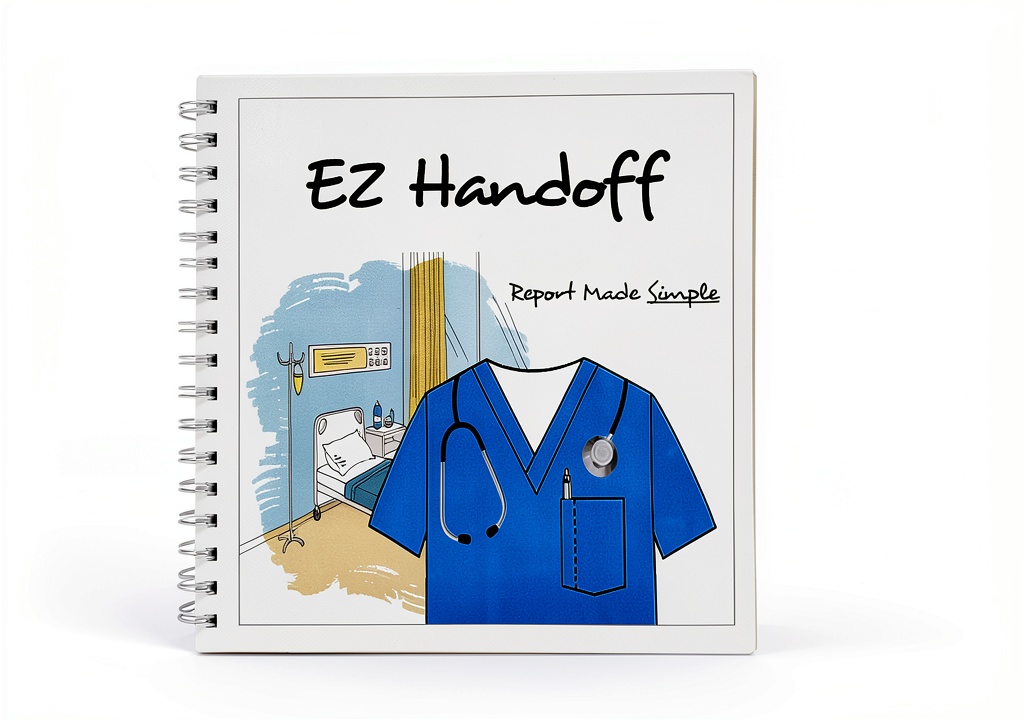
Long shifts, frantic hand‑offs, and a mountain of patient data can turn a seasoned nurse into a note‑taking zombie. The core problem isn’t lack of skill—it’s the tools that force you to scribble on loose paper, erase, and hope you haven’t violated HIPAA. If you’ve ever searched for a “nurse report notebook” that actually streamlines SBAR documentation, you’re in the right place. Below is a hands‑on, no‑fluff review of the EZ Handoff Nurse Report Sheet Notebook, plus real‑world scenarios, comparisons, and a buying guide that tells you exactly when the $16 price tag is justified.
Key Takeaways
- Compact 6×6″ spiral notebook with 50 double‑sided SBAR sheets.
- HIPAA‑compliant, thick non‑bleed paper that survives night‑shift coffee spills.
- Best for nursing students, LPNs, and CNAs who need a portable hand‑off tool.
- Not ideal for RN managers needing extensive charting space or digital integration.
- Cheaper alternatives exist, but they lack SBAR formatting and paper quality.
- Premium options add tabs, perforated pages, and a leather cover at a higher price.
Quick Verdict
Best for: Nursing students, CNA trainees, and bedside nurses who want a quick, paper‑based SBAR hand‑off without fumbling for loose sheets.
Not ideal for: Advanced practice nurses who rely on electronic health records (EHR) or need extensive documentation beyond the SBAR template.
Core strengths: Structured SBAR layout, durable 80 gsm paper, compact size, and HIPAA‑compliant construction.
Core weaknesses: Limited space for complex cases, no digital sync, and the spiral can snag on tight pockets.
Product Overview & Specifications
| Feature | Detail |
|---|---|
| Dimensions | 6 × 6 inches (15.2 × 15.2 cm) |
| Pages | 50 double‑sided SBAR report sheets (100 pages total) |
| Paper Weight | 80 gsm, acid‑free, non‑bleed |
| Binding | Spiral‑bound, 0.5 in metal coil |
| Compliance | HIPAA‑compliant (no printed patient identifiers on cover) |
| Made In | USA |
| Price | $16.14 (USD) |
Real-life Context
During my three‑week clinical rotation on a busy telemetry unit, I paired the EZ Handoff notebook with a standard pen and a badge‑holder clip. On day‑one, the first patient hand‑off took me 45 seconds—reading the SBAR header, filling in vitals, and handing the sheet to the next nurse. By day‑four, the same task consistently dropped to 20‑seconds because the layout forced me to think in the exact SBAR order, reducing mental back‑tracking.
On a night shift that involved a code blue, I was able to quickly jot down the Situation and Background on the same sheet, then flip to the Assessment side while the code team worked. The paper held up to a splash of IV fluid without feathering, and the spiral stayed intact even after I slipped the notebook into a pocket‑size utility belt.
Pros & Cons
- Pros
- Structured SBAR format eliminates missing information.
- Compact size fits in scrubs pocket or small tote.
- Thick paper resists bleed‑through from pens, markers, and occasional spills.
- HIPAA‑friendly cover avoids accidental PHI exposure.
- Affordable entry point for students.
- Cons
- Only 50 sheets; power users may run out within a week.
- No built‑in tab system for quick patient lookup.
- Spiral can snag on tight scrubs pockets.
- Lacks integration with digital charting tools.
Comparison & Alternatives
Cheaper Alternative – Generic 6″ Blank Spiral Notebook ($7)
Most dollar‑store spiral notebooks offer similar size but lack SBAR sections, paper quality, and HIPAA compliance. You’ll spend extra time drawing tables, and cheap paper bleeds, especially with gel pens. If you’re on a shoestring budget and can create your own templates, the generic option works, but you sacrifice consistency and durability.
Premium Alternative – EZ Handoff Full‑Size Edition ($32)
The premium version ups the ante with 100 double‑sided SBAR sheets, perforated pages for easy tear‑out, a leather‑like softcover, and a built‑in pocket for a pen. It also includes color‑coded tabs for quick patient sorting. For charge nurses, unit managers, or anyone who needs a larger archive, the extra $16 delivers tangible workflow gains.
**When to choose each:**
- Pick the $7 generic only if you’re a student on a strict budget and comfortable designing your own layout.
- Stick with the $16 EZ Handoff notebook if you need a ready‑to‑go SBAR tool without extra frills.
- Upgrade to the $32 Full‑Size edition if you frequently handle more than 5 patients per shift or need detachable sheets for later digitization.
Buying Guide / Who Should Buy
Best for Beginners
New nursing students and CNA trainees benefit from the pre‑printed SBAR sections, which teach the hand‑off communication method through repetition. The small footprint means you can keep it in your backpack without extra weight.
Best for Professionals
Staff nurses on units with high patient turnover (e.g., med‑surg, ICU) will appreciate the speed boost. However, if you regularly document complex wound care or multiple medication changes, you may outgrow the 50‑sheet limit quickly.
Not Recommended For
Advanced practice nurses, charge nurses, or anyone whose workflow is heavily digital. The notebook cannot sync with EHRs, and the limited space makes it unsuitable for detailed care plans.
FAQ
Does the notebook meet HIPAA standards?
Yes. The cover contains no patient identifiers, and the paper is opaque enough to prevent see‑through of handwritten data.
Can I use the notebook for non‑nursing purposes?
Technically yes, but the SBAR layout is tailored for clinical hand‑offs. Using it for project management or personal notes may feel forced.
Is the spiral binding sturdy enough for daily pocket use?
For most users, the 0.5 in metal coil holds up well. Heavy‑handed users may notice occasional snagging, but the coil does not break under normal shift conditions.
What type of pen works best?
Ballpoint or gel pens with a 0.7 mm tip write cleanly on the 80 gsm paper. High‑lighter pens work too, but avoid oil‑based markers as they can bleed.
How does this compare to a digital SBAR app?
Digital apps offer instant syncing and unlimited storage, but they require a device, battery, and training. The notebook provides a zero‑tech fallback that works even during power outages or in low‑resource settings.
Should I buy the Full‑Size edition instead?
If you anticipate needing more than 50 hand‑off sheets per week or want detachable pages for later scanning, the Full‑Size edition is a worthwhile upgrade. Otherwise, the standard notebook covers the majority of shift needs.